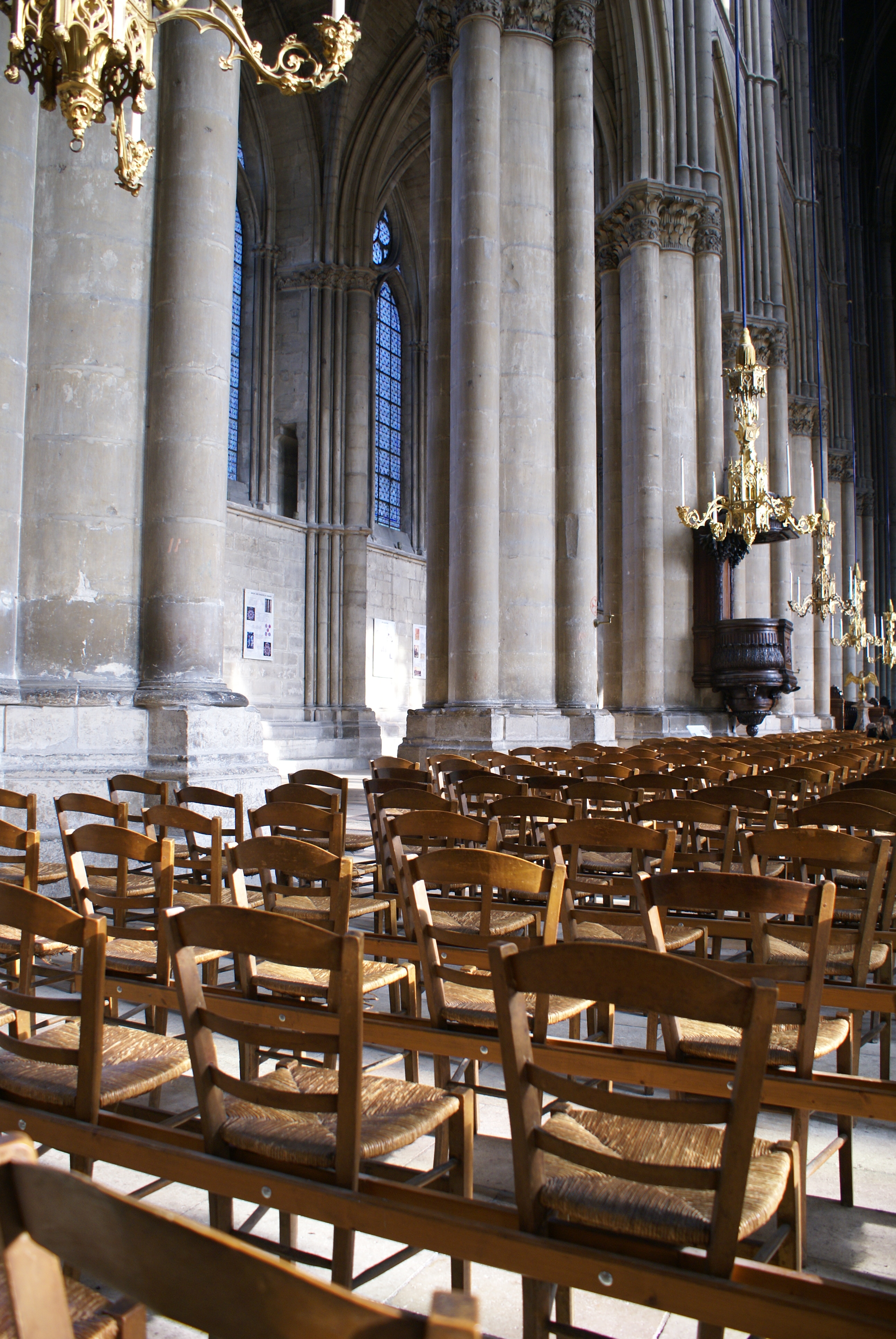
We escaped rainy Paris for frigid Reims on Tuesday the 12th, using the super fast TGV (high speed train).
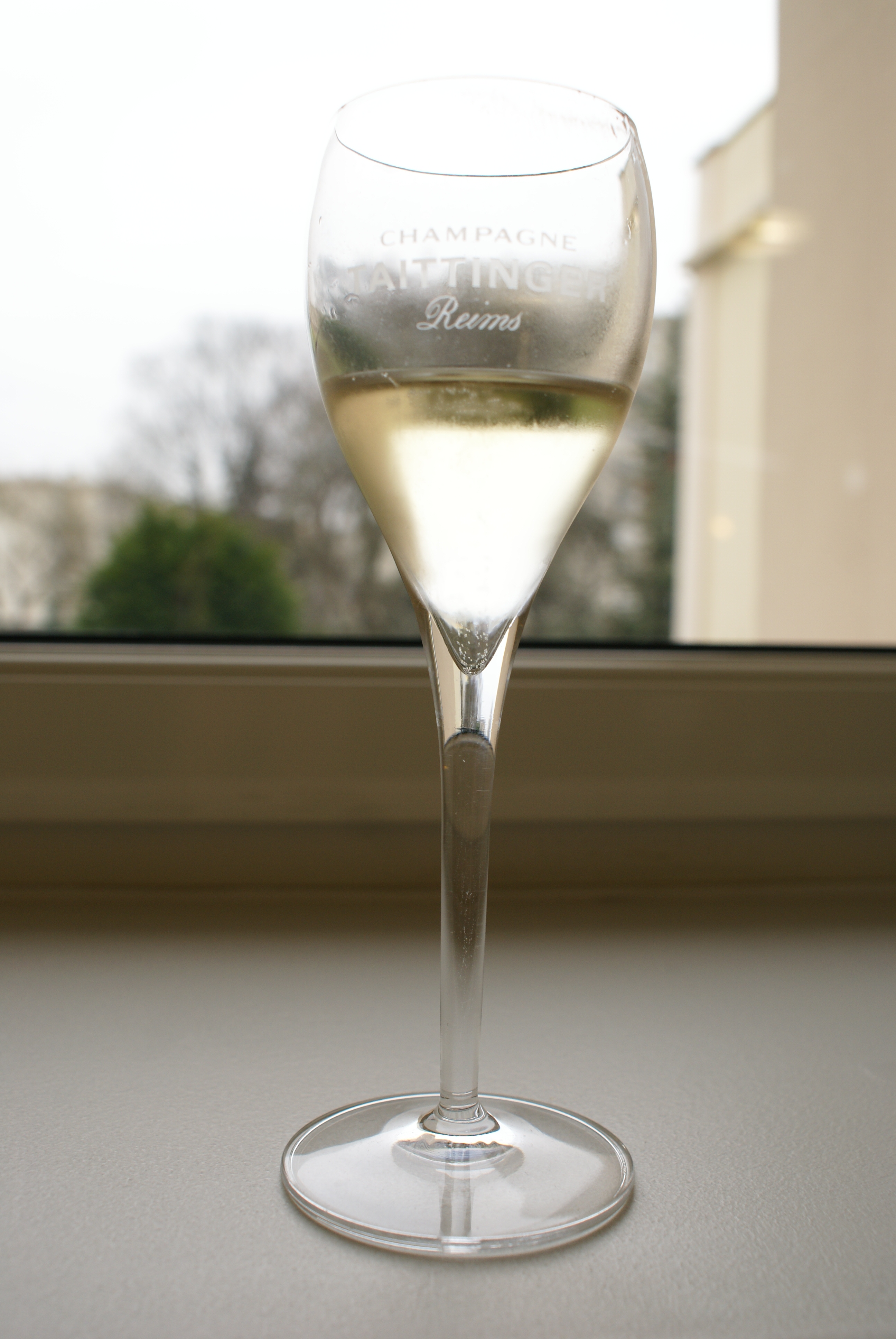
Reims is located in the Champagne-Ardenne region so, naturally, we were anxious to visit one of the champagne caves! The city adheres to the French system wherein all businesses close for two hours between noon and 2:00, which unfortunately meant that we had time enough to visit only one cave—Taittinger (Tay-tahn-zhay).
According to the guide from our tour, Taittinger is a family-owned Champagne house whose origins date back to the 1800s, though the Taittinger family has owned it since the 1930s. We also learned that there are laws in place in the Champagne region that impose tight controls on the production of champagne, from the cultivation of the grapes to the fermentation process, to final bottling. For example, all grapes used for champagne must be hand-harvested, that is to say, people weilding pairs of gardening shears must painstakingly cut bunches of grapes, pound after endless pound. All machinery and equipment for harvesting is strictly forbidden. Every bottle of true champagne, then, represents numerous sufferers of back pain and carpal tunnel syndrome.
We wandered around a very small portion of Taittinger’s underground caves where some of their champagne undergoes their primary and secondary fermentation. They have a much larger underground facility located in downtown Reims, but it sounds like it’s very industrial and modern-looking which probably isn’t conducive to impressive, romantic tours such as the one we enjoyed.
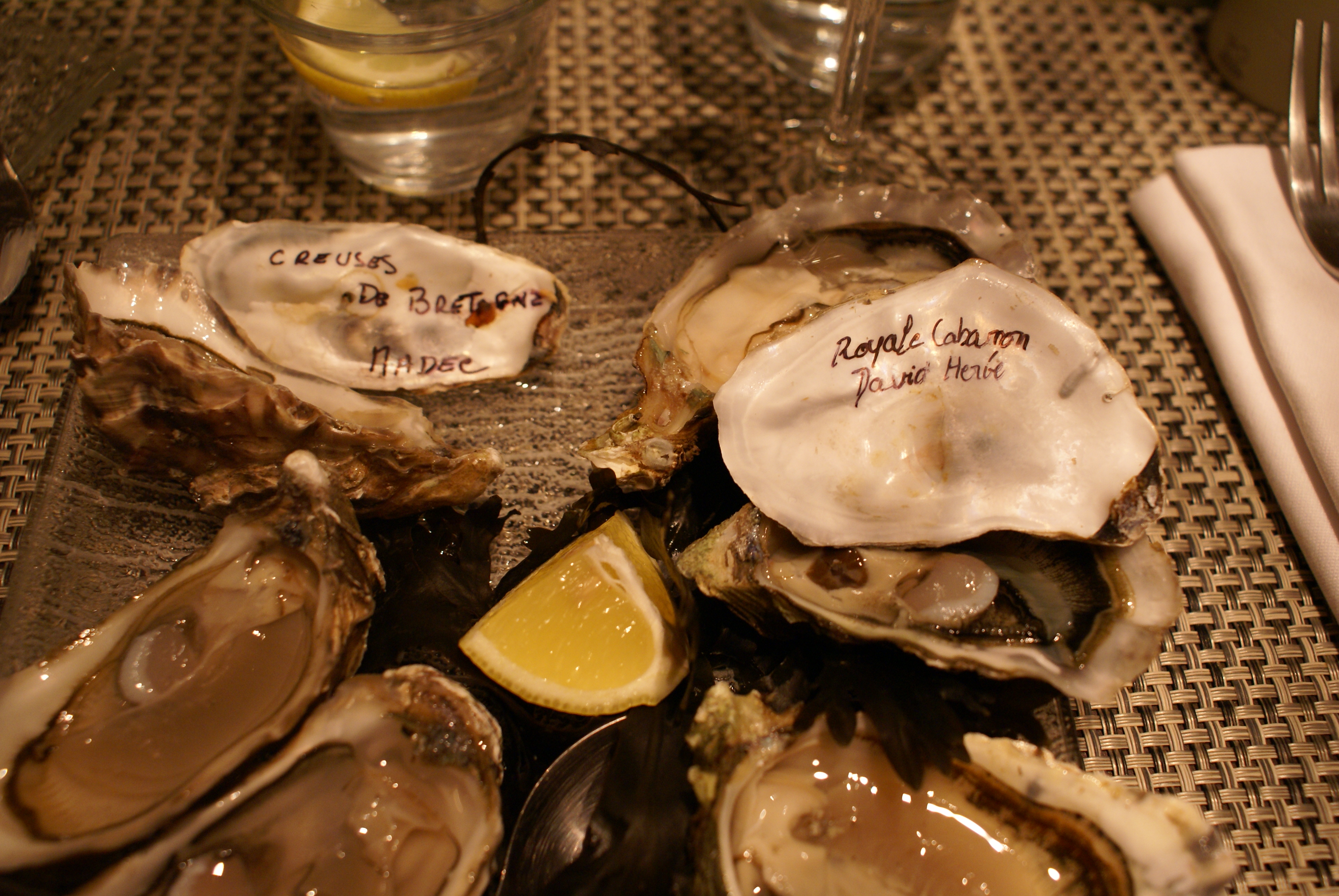
We had dinner in a teeny, tiny little matchbox of restaurant, Le Bocal, with seating for only fourteen guests. Le Bocal is located at the back of a local fishmonger, so seafood featured heavily on the menu. Several types of raw oysters were on the menu, and we weren’t really sure how we were supposed to be able to tell the difference on our plates. The chef literally spells it out, as you can see above.
 MEMORIES LIE...