D and I read a bit about the history of Nimes in preparation for this trip, but the story of this ancient city really came alive for me when we participated in a two hour walking tour of the preserved Roman sites yesterday (offered by the local tourism office).
As with most places that were once under the rule of the Roman Empire, Nimes is rich in archaeological finds (housed in the city’s museum), as well as ruins such as the amphitheatre (les Arenes), and La Porte Auguste, one of the gates that led into the walled city.The Romans appeared in Nimes around 20 BC, colonising the city that was called “Nemaus” by the Gaul people who lived here (the Romans changed the name to Nemausus).
Under Roman rule, Nemausus prospered and grew, and became an important city in this part of the empire. An aqueduct was built to ensure a water supply (part of it, the Pont du Gard, still stands near the outskirts of Nimes, and is a UNESCO world heritage site), and a temple and an amphitheatre were built.
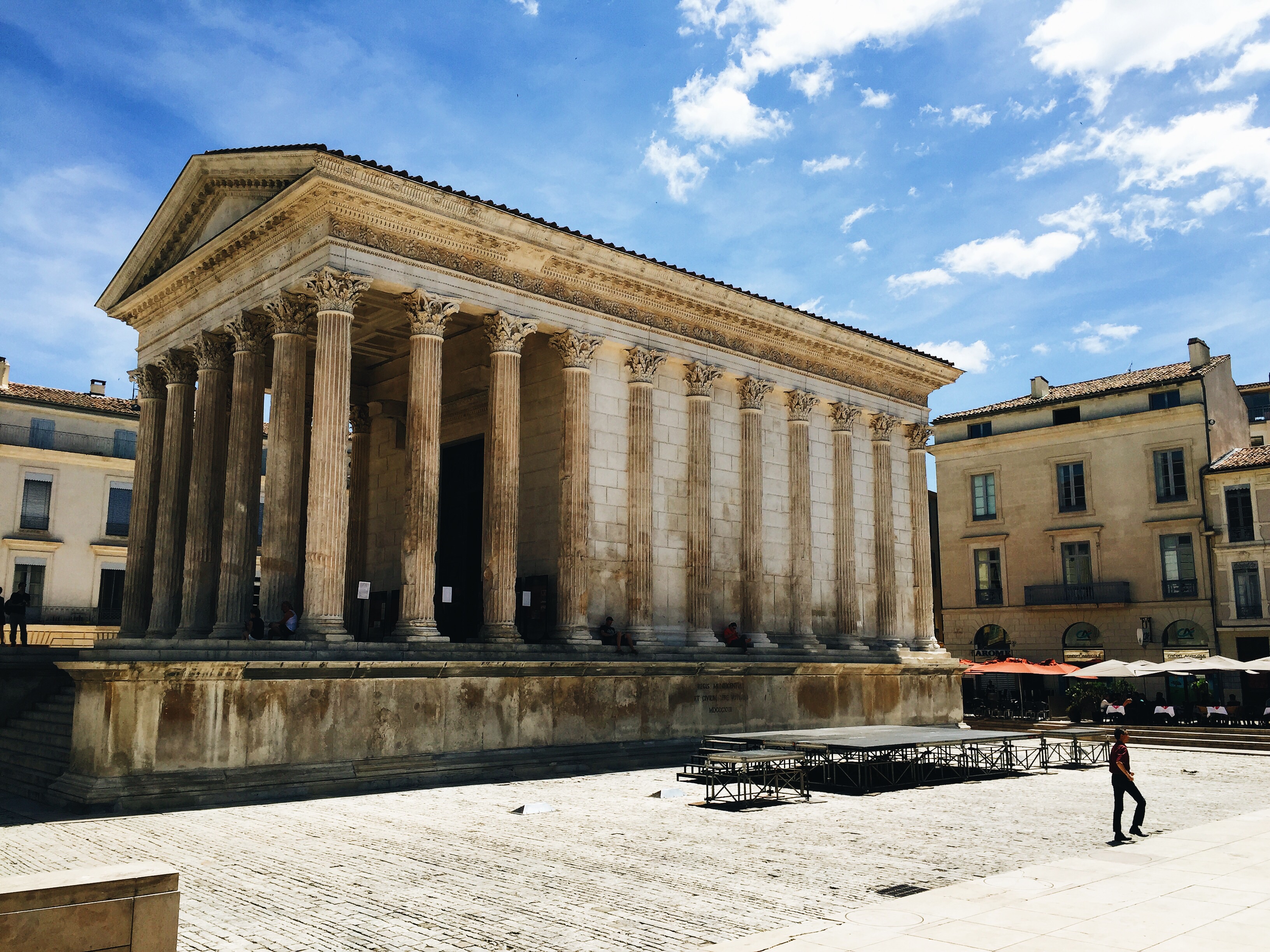

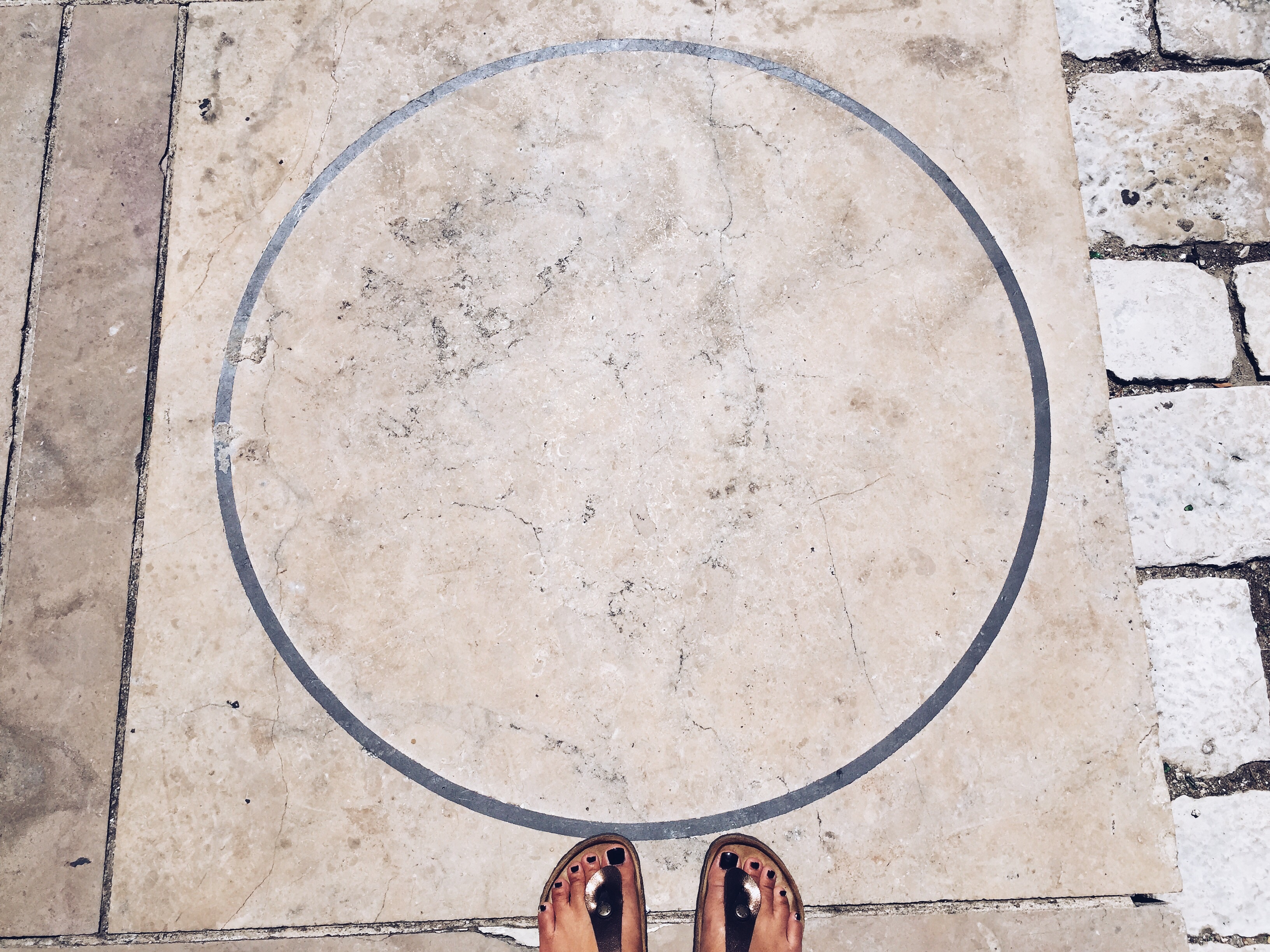
La Maison Carree, while heavily restored, is considered one of the best preserved Roman temples remaining in the world. The temple would have been a sacred site, in the middle of the city, surrounded by an “arcade” of columns. A few stumps of columns remain, and the city has also placed circles on the ground near the Maison Carree to indicate where the columns would have been placed (my toes are there for contrast):
The Amphitheatre, called “Les Arenes de Nimes”, was built around 70 AD, and still holds events such as bullfights during Nimes’ famous feria, as well as concerts and music festivals. It was heavily damaged after the fall of the Roman Empire, when pieces of it were taken for construction purposes, and it was even used as a sort of “village” in the middle ages when people built their homes within its walls.


The Porte Auguste is one of the gates that led into the walled Nemausus. There were two large arches for chariots to travel in opposite directions, that could be secured by both an inner iron gate and a heavy door that was barred shut. On each side of the large arches were smaller arches for pedestrian traffic.

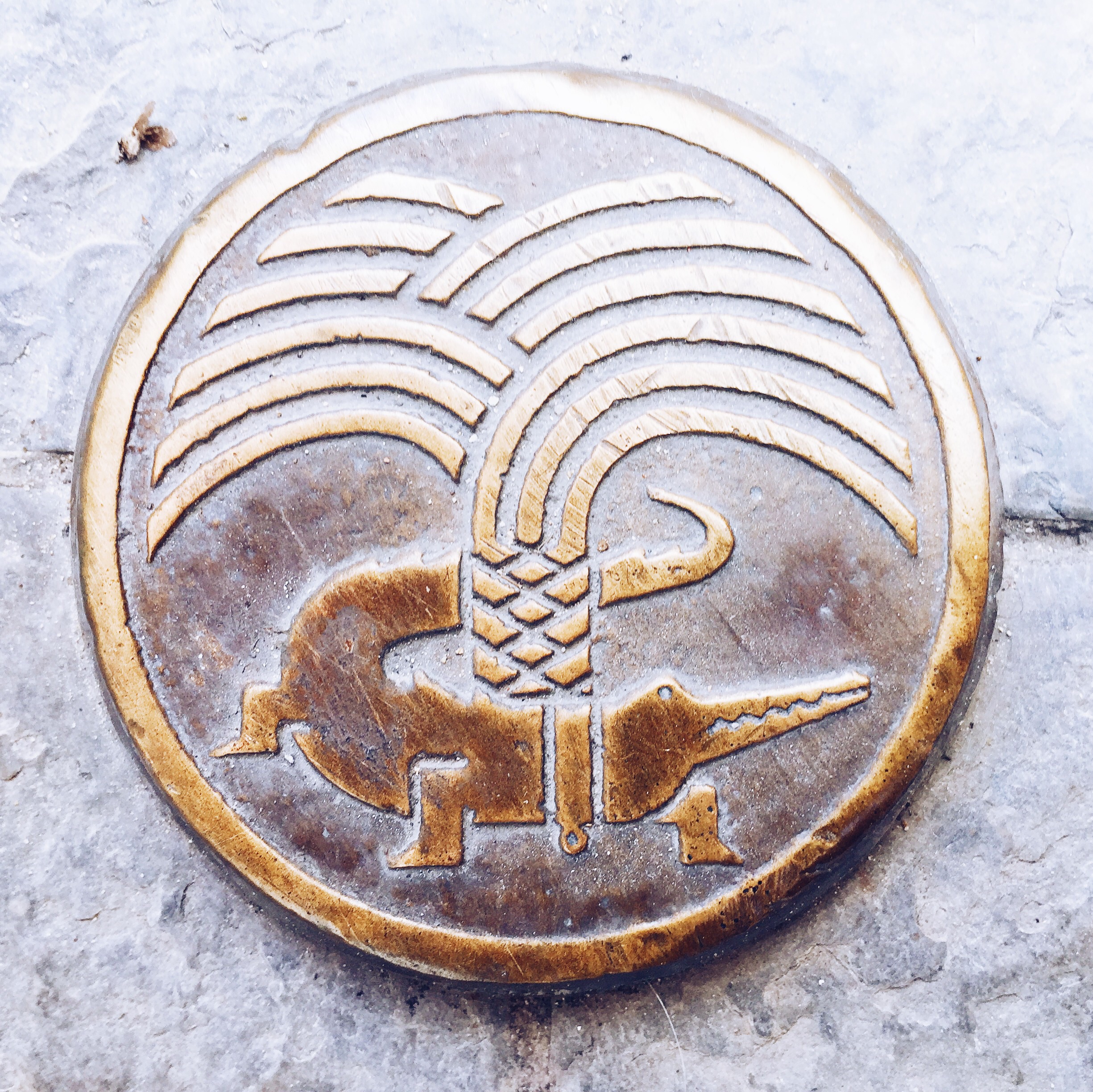
Everywhere in Nimes, there seem to be palm trees and statues of crocodiles, neither of which are common in the south of France! In fact, the city’s coat of arms contains a crocodile chained to a palm tree. Leave it to the Romans to be responsible for this, as well, as explained to us by our brilliant tour guide.
Octavius (later Caesar Augustus) defeated Mark Antony in the Battle of Actium in 31 BC, turning the former Roman republic into an empire. In commemoration, a new coin was minted, showing a crocodile chained to a palm tree, with a wreath of laurel atop, symbolizing Roman defeat of Egypt. The link to Nimes?
The coin was minted in Nemausus.
 MEMORIES LIE...