At our last trip to Israel, we picked up a massive coffee table book at Ben Gurion airport about archaeological sites in Israel. Everyone needs a hobby, and ours happens to be an interest in Roman history/the Roman Empire.
We rented a car in Tel Aviv and drove to a couple of archaeological sites about 2 hours from the city. When we originally planned this trip, we had not realized that our stay in Tel Aviv would coincide with the city’s celebrated Pride Week, and sadly for us, the day we picked up our car was also the day of the Pride parade. We had hoped to catch some of it as well as the festivities on the beach where the Parade would terminate, but were advised by the rental agency that the streets would be closing very early in the morning to prepare for the parade, and would remain closed until the evening. We had no choice but to fetch the car and get moving early, but promised ourselves that we would check the dates for Pride Week in future visits to Tel Aviv so as not to miss the festivities.
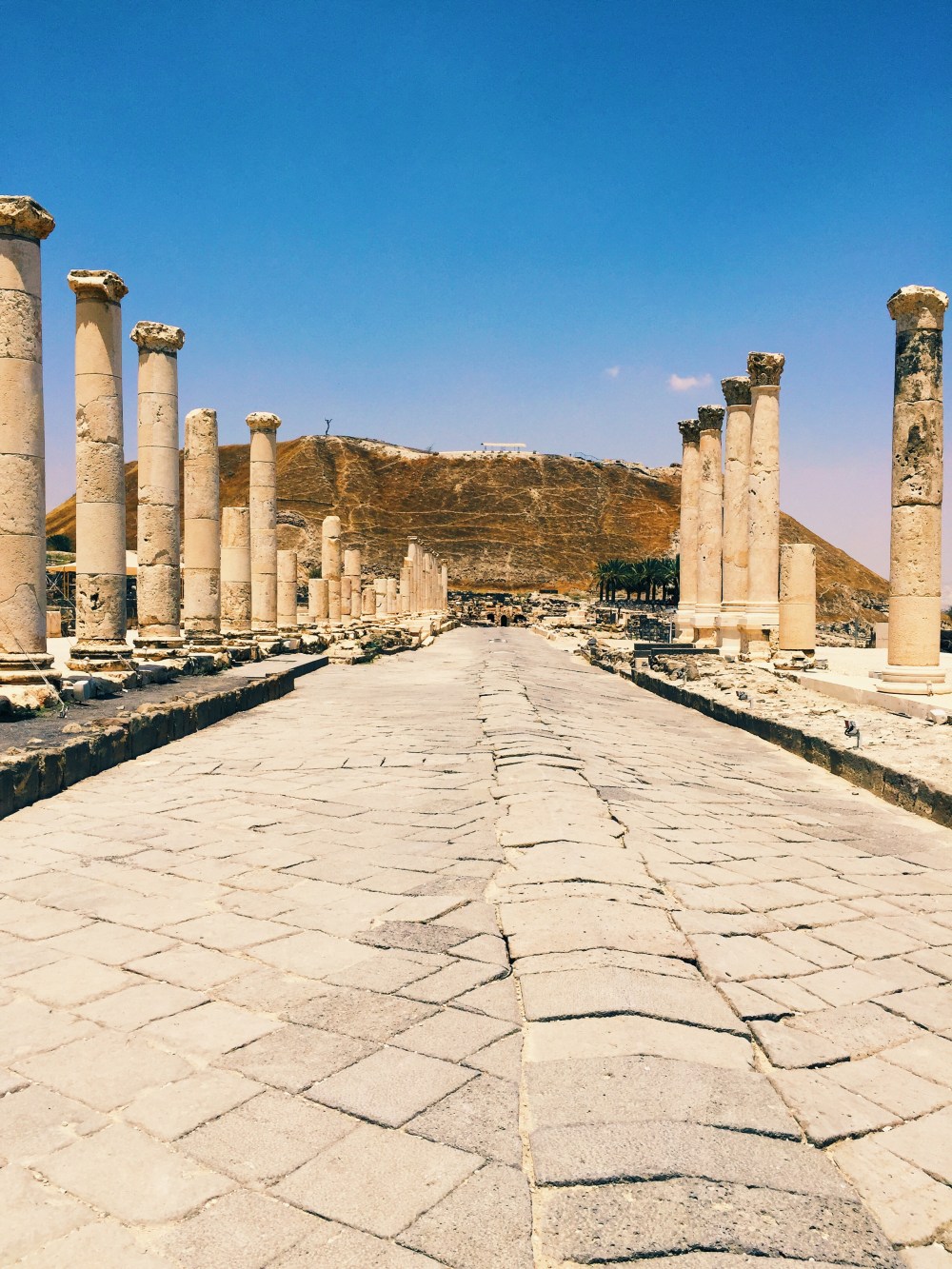
First up was Zippori National Park in the Galilee, close to Nazareth. The excavations here revealed the remains of a once grand city such as streets, homes, an amphitheatre, baths, market, a synagogue, a water reservoir, and aqueducts (outside the city) which all date from the Roman and Byzantine eras.
![IMG_5183[1].JPG](https://memorieslie.com/wp-content/uploads/2017/06/img_51831.jpg?w=1000)
![IMG_5184[1].JPG](https://memorieslie.com/wp-content/uploads/2017/06/img_51841.jpg?w=1000)
![IMG_5165[1]](https://memorieslie.com/wp-content/uploads/2017/06/img_51651.jpg?w=1000)
![IMG_5182[1]](https://memorieslie.com/wp-content/uploads/2017/06/img_51821.jpg?w=1000)
![IMG_5192[1].JPG](https://memorieslie.com/wp-content/uploads/2017/06/img_51921.jpg?w=1000)
![IMG_5211[1].JPG](https://memorieslie.com/wp-content/uploads/2017/06/img_52111.jpg?w=1000)
![IMG_5206[1]](https://memorieslie.com/wp-content/uploads/2017/06/img_52061.jpg?w=1000)
 MEMORIES LIE...